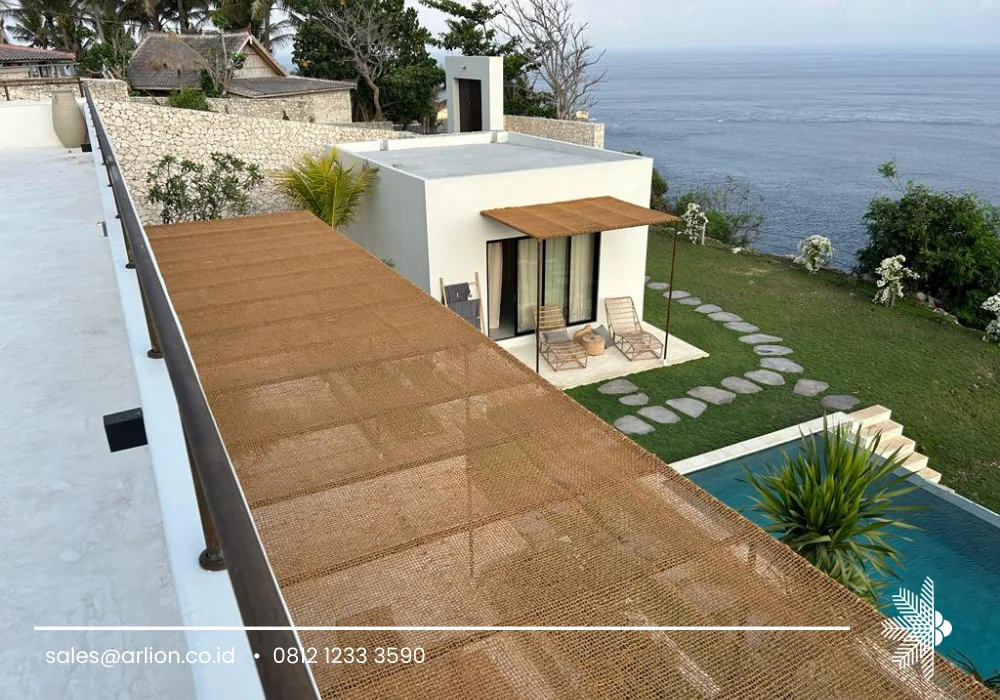
In the quest to create shaded outdoor areas that are both functional and beautiful, coconut shade sail systems offer an inspired solution. Indonesia CocoFiber, via their Indococo line, is helping to lead this movement with their coconut fiber–woven sun sails. These eco-friendly, UV-resistant sun shade installations deliver more than simple sun screening — they bring texture, natural warmth, and sustainable design to patios, gardens, and façades.
What Is a Coconut Shade Sail?
A coconut shade sail is essentially a canopy made from woven coconut (coir) fibers, engineered to provide protection from the sun while blending into the natural environment. Indococo’s Coconut Sun Shade Sails are described as “woven from coco coir fiber as strong, UV-resistant outdoor coverings designed to provide reliable protection from the sun’s harsh rays.”
Unlike synthetic fabric sails, coconut (or coir) offers good durability, breathable structure, and a natural aesthetic. In Indococo’s offering, the mesh is listed at 1 × 1 cm (a fine weave) and available in shapes such as rectangles and triangles, with customization options available to suit specific dimensions.
These sails serve multiple roles: they provide shade for patios, garden seating zones, swimming pool areas, recreation spots, and more. They also help improve air circulation and reduce heat buildup while softening the visual presence of a structure.
Budget-Friendly Shade: Affordable Shade Sails
One of the challenges in outdoor architecture is balancing aesthetics, function, and cost. That’s where Indococo’s blog on Affordable Shade Sails is relevant. They promote shade sails as a cost-effective alternative to heavy pergolas or permanent awnings.
Key advantages include:
- Cost savings — shade sails can deliver coverage and UV protection at a lower price than built structures.
- Durable materials — these sails are often made from UV-resistant fabrics or natural fibers (including coir) to stand up to sunlight over time.
- Design flexibility — they come in multiple shapes, sizes, and colors.
- Eco-friendly angle — coir-based sails are especially appealing for those who prioritize sustainability.
Indococo positions itself as a supplier that offers “high-quality, budget-friendly shade sails with a focus on sustainability and performance.”
Integrating Keywords Naturally
The woven coir material ensures a uv resistant sun shade that filters harmful rays but still allows gentle light and airflow. Whether you’re ordering a triangle sun shade, rectangle sun shade sail, or a more custom coco sunshade sails configuration, the coconut fiber substrate provides a warm, organic feel.
A coconut shade sail can act as a soft architectural accent, wrapping outdoor spaces in a natural veil. With demand for uv resistant sun shade rising in tropical climates, coir-based sails deliver performance without heavy reliance on synthetic polymers.
Enhancing Aesthetics of Buildings with Coconut Sun Shade
Beyond functionality, coconut sun shade installations can dramatically elevate the aesthetic appeal of buildings, creating a more engaging, warm, and sustainable architecture. Here’s how:
1. Natural Texture and Earthy Tones
The golden-brown color of coir introduces a soothing, organic palette that complements wood, stone, brick, and greenery. Against modern concrete, it softens harsh lines; alongside tropical landscaping, it harmonizes with palm fronds and foliage.
2. Lightweight Sculptural Canopies
Shade sails are visually light and dynamic. When stretched across facades or between columns, they create floating planes of shadow and light, adding architectural interest. A triangle sun shade pulled taut across a courtyard corner can evoke a sailboat spinnaker in repose.
3. Dynamic Shadow Play
Because the weave is semi-porous and the edges often angled, coconut shade sails cast dappled, moving shadows as the sun shifts. This interplay of light and shade animates walls, floors, and surrounding surfaces—making plain facades come alive.
4. Integration with Greenery
Coco sunshade sails blend especially well with vertical gardens, pergolas clad in vines, or palm trees. Their natural fiber looks less intrusive than bright synthetic sails and supports a “living architecture” aesthetic.
5. Architectural Accent Layers
Coconut shade sails can act as an overlay or secondary skin over balconies, terraces, or walkways. When layered with other architectural elements (louvers, screens, timber slats), they add texture without bulk.
Environmental Benefits of Coir / Coconut Materials
One of the most compelling rationales for coconut shade sails is their eco credentials:
- Renewable and abundant — coconut fiber (coir) is a byproduct of coconut processing and widely available in tropical regions.
- Biodegradable — unlike plastics, coir eventually breaks down, leaving less environmental residue.
- Low embodied energy — producing coir fiber generally requires less energy and fewer chemical additives than synthetic polymers.
- Reduced microplastics — coir sails won’t shed synthetic microfibers in rain or wind.
- Local sourcing potential — in many tropical countries, coconut husks are locally available, reducing transport emissions.
- Carbon sequestration — as a natural plant fiber, coir retains some carbon within its structure over its usable lifetime.
Indococo emphasizes these eco-friendly options in their product line, positioning coir as a sustainable alternative to synthetic shade fabrics.
Practical Considerations: Installation, Maintenance & Longevity
Anchor & Tensioning
Install anchor points using strong fixtures (e.g. stainless steel eyelets, turnbuckles). Sails work best when tensioned properly. For rectangle sun shade sail types, strive for four well-balanced anchor points. For triangle sun shade designs, tension at three corners with appropriate angles to shed rain.
Angled Installation
Always slope the panel slightly (5–15° gradient) so rainwater can run off rather than pool. This prevents stagnation and prolongs lifespan.
Cleaning & Inspection
Wipe with mild soap and water periodically to remove dust or algae. Avoid harsh chemicals that may degrade natural fibers. Inspect seams, edges, and anchor points for wear, and repair or reinforce as needed.
Seasonal Removal
During extreme storms or heavy wind events, consider taking down or loosening the sail to avoid damage.
Replacement & End-of-Life
When a coir sail reaches its end, it can typically be composted or disposed of more benignly than synthetic alternatives.
Use Cases & Design Inspiration
- Residential patios: Stretch a coconut shade sail over a veranda or outdoor dining area to create a cozy, filtered shade zone.
- Poolside shading: Use a rectangle sun shade sail over a section of the pool or lounge area to reduce glare and heat.
- Garden cove: A triangle sun shade anchored between a tree, a post, and a wall can shade a seating nook.
- Café terraces: Coco sunshade sails can serve as rustic awnings over outdoor tables, delivering shaded comfort and a signature style.
- Commercial walkways: Larger coconut shade sail stretches can animate entrance zones or courtyards.
Conclusion
In the evolving landscape of outdoor architecture and sustainable design, coconut fiber shade sails represent a compelling alternative to traditional synthetic shading fabrics. With a coconut shade sail, you enjoy natural aesthetics, breathable structure, and uv resistant sun shade performance. Whether disguised as a triangle sun shade, rectangle sun shade sail, or coco sunshade sails, the underlying coir weave brings warmth, texture, and environmental integrity.
Thanks to the affordability and versatility detailed by Indococo in their blog on Affordable Shade Sails, these solutions are increasingly accessible even for budget-conscious projects. When properly installed and maintained, coconut sun shade sails not only elevate the beauty of façades and outdoor spaces but also adhere to principles of sustainability and low environmental impact.
WhatsApp (+62)812 1233 3590 (Ms.Maria)
Email sales@arlion.co.id